
How mass tourism affects local communities
Written by Sofia Camaano Deus
From 15th June, 47 planes with German tourists will be entering the Balearic Islands (Spain). This news would not be remarkable any other summer, as tourists from all over usually pack out Spanish shores and cities. Nevertheless, in the middle of a global pandemic and considering that even Spanish citizens cannot move between regions, the fact of letting tourists enter Spain without the need of going through quarantine is a controversial decision.
During the worldwide coronavirus crisis, hundreds of pictures highlighting the emptiness of beaches, parks and cities were uploaded on social media. These images were mostly read as an environmental wake-up call. Nevertheless, it is important to underline that it was not just the environment that got a rest during the lockdown. Local communities have been drowning over years due to the capitalist logic of mass tourism.
I remember last summer when I was going from South Spain to Barcelona hitchhiking throughout the Mediterranean sea line. A Moroccan guy that was on his way to visit his cousins left us in Benidorm, a very touristic city in the region of Valencia. Walking through its streets felt like being in a museum. It seemed that at any time the shop showcases full of Spanish souvenirs would fall down due to the wind as if they were made out of cardboard.
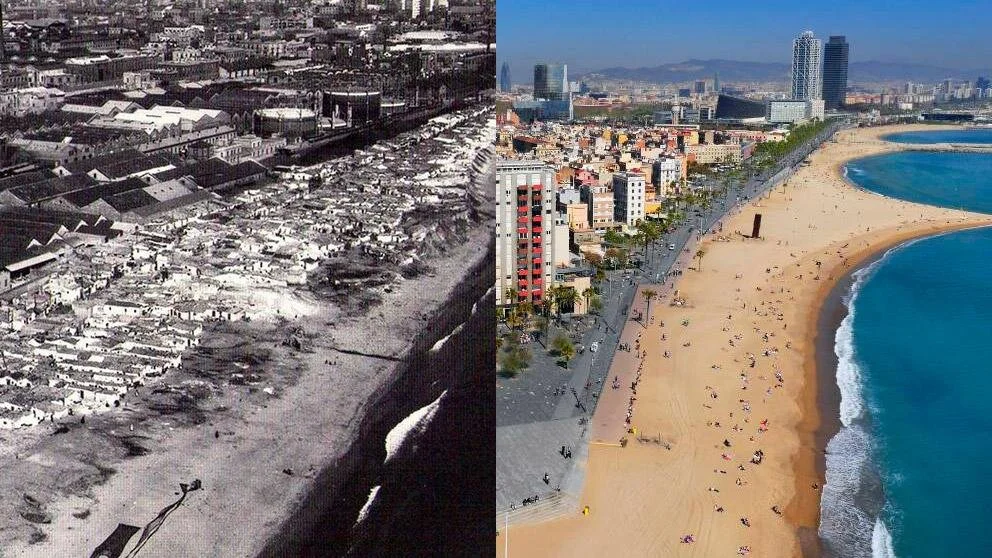
The process of gentrification has radically changed neighbourhoods all over the Spanish geography. Where there used to be a local family-run bakery, there is now a shop decorated with striking colours and blinking lights where you can just buy fancy cupcakes at high prices. Locals cannot afford to shop in their neighbourhood anymore, nor can they even afford their rent.
The international company Airbnb has played a core role in the transformation of local neighbourhoods in highly touristic cities. This platform was presented in the beginning as a collaborative initiative through which locals could share their apartments with tourists. Nevertheless, nowadays it is pure business: 75% of the Airbnb ads have a commercial nature, not a collaborative one. The prices that locals are able to pay for rent cannot compete with the ones that international tourists would reimburse for a holiday’s accommodation.
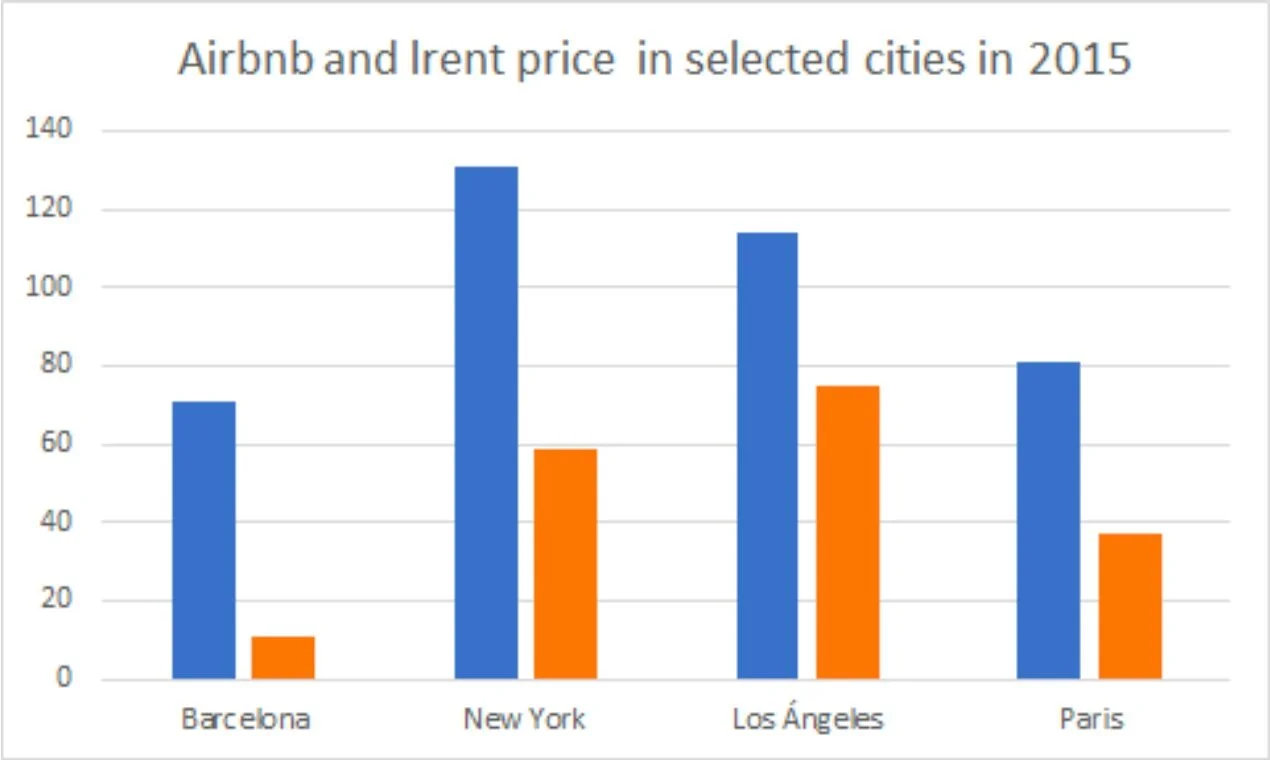
Blue: Average Airbnb price/day (euros) / Orange: Long-term rent price/day (euros)
A recent study about how short-term rent platforms affect the housing market in Barcelona has shown that in the neighbourhoods with an elevated presence of Airbnb, the rent price has risen by 7% and the buying price by 19%. This has provoked many locals to leave their homes and move to cheaper places in the outskirts of the city. Consequently, businesses' main priority of satisfying the local community needs has changed. Everything is built now around the tourist’s needs. Mass tourism is not focused on getting to know the local way of living. It is a business whose aim is to keep the travellers in a little bubble of comfort while making them believe that they are experimenting and discovering the local culture.
Last week I watched an unusual video: a group of kids playing football on the street in front of the Cathedral of Barcelona. This area used not to be frequented by locals as there were always multitudes of tourists. Maybe we should not be so hurried to implement back a kind of tourism that is ruining local life. If the system's wealth depends on killing local communities to survive, it might not be working.