
Social Distancing in a Refugee Camp
How is COVID-19 affecting flows of migration and the status of migrants in refugee camps across Europe?
Written by Sofía Caamaño Deus
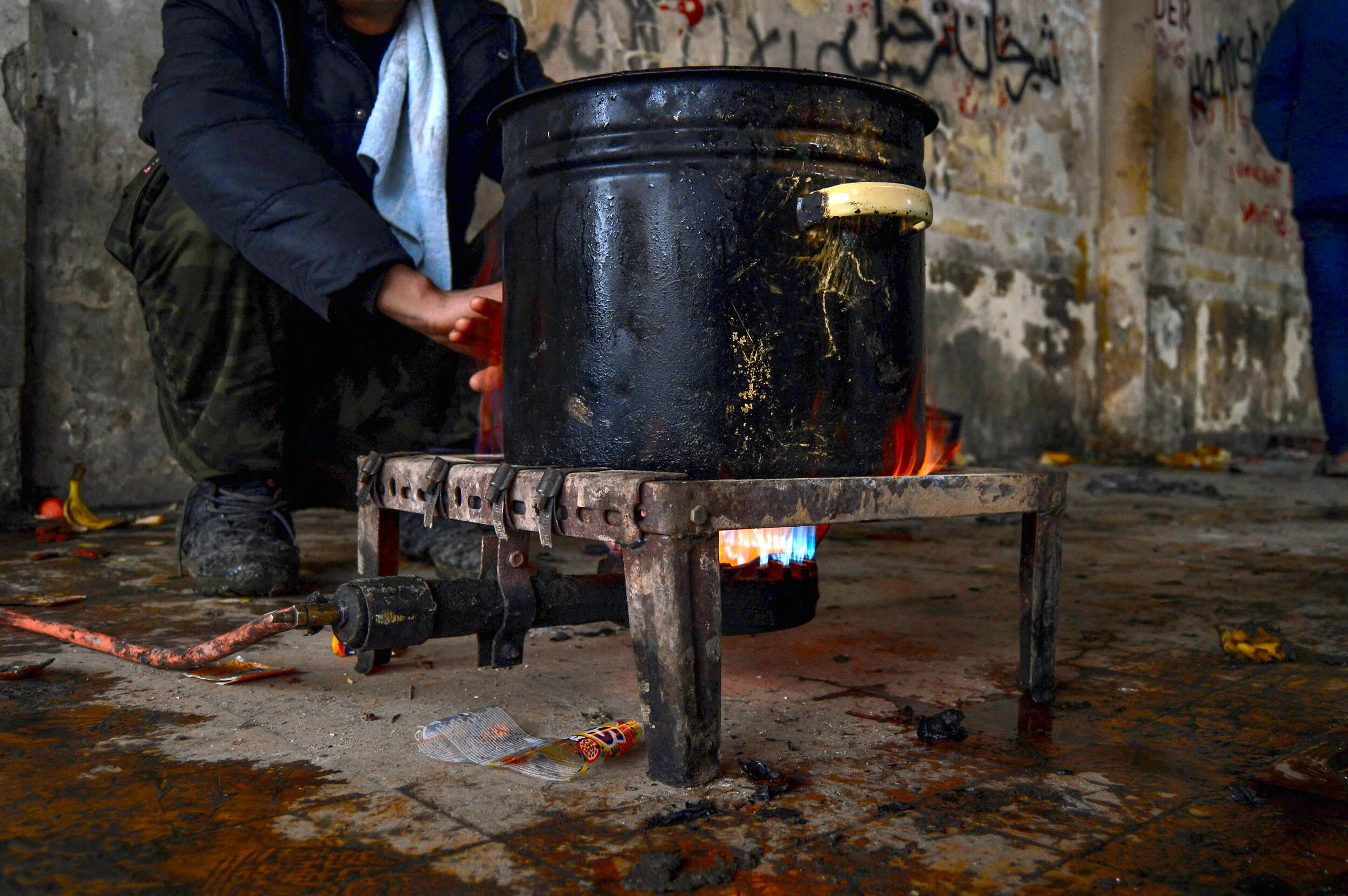
The official refugee camp for families in the village of Sid, Serbia, is in front of the train station. The fence that separates the camp yard from the surroundings acts as a border that divides the tough reality of migrants who travel alone sleeping on the street from the cheerful sounds of kids playing in the garden. Despite how it might look at first sight, their lives are not that different.
To enter an official refugee camp, you either need an authorisation from the camp commissioner or an invitation from someone who lives there. The first time I was able to go in was because an Iraqi family I met in a café allowed me to visit them. The walkable space in the room was almost nonexistent. The whole area was occupied by a bed and a mattress placed on the floor. A couple and three little kids were living there. “We are the lucky ones”, they told me while sipping into their glasses of mint tea. Many families must share their small rooms between them. Yet, they are the lucky ones in comparison to those that sleep inside a tent in makeshift settlements or in the bare night.
It is not fair to pronounce the word lucky under such circumstances that have not randomly happened, nor were they a misfortune. This is occurring because of the deliberate decisions that powerful western countries have been taking regarding their border policies. The same authorities that are currently enforcing self-isolation and social distance for its citizens. Governments around the world - some earlier than others - have been proclaiming during the past weeks that they care and prioritise life. Whose lives?
![2,800 children (34% of the total) who arrived in Europe between January and June 2019 were unaccompanied. [Source]](https://images.squarespace-cdn.com/content/v1/590e2b26d1758e85c58568d8/1585662433433-6IXLZR7ME3G95U54GQJG/a.jpg)
2,800 children (34% of the total) who arrived in Europe between January and June 2019 were unaccompanied. [Source]
Moria refugee camp, in the Greek island of Lesvos, has a capacity for 3,000 persons, albeit more than 17,000 are currently living there. The largest refugee camp in Europe, described as hell by some of their inhabitants is now, according to Doctors Without Borders, an ideal breeding ground for a rapid spread of coronavirus.
Before the outbreak of the virus, the situation in Moria was already worsening. On 27th February, Turkish president Erdogan announced that the border with Greece would onwards be open after 33 Turkish soldiers were killed in the Syrian province of Idlib. This meant the rupture of the 2016 EU-Turkey deal through which the European Union would give six billion euros to Turkey while Ankara would deter migrants to cross to the Greek islands.
After this announcement, thousands of migrants moved throughout the woods to the Evros river in the border between Turkey and Greece, whilst others tried to arrive at the islands by boat. Nevertheless, the Greek authorities did not allow them to enter and attacked them with tear gas, stun grenades, and water cannons.
Furthermore, at the beginning of March, the Greek government has suspended the asylum application for one month, which is illegal under the 1951 Convention Relating to the Status of Refugees and the EU Refugee Law (UNHCR, 2020). At this point, the European Union said nothing, and they claimed Greece to be Europe’s shield.
Lesvos became a dangerous place for NGOs, activists, and journalists to develop their activities, as checkpoints controlled by fascist groups were settled all over the island. During this time, several organisations had suffered damages in their workplaces, and many humanitarian aiders had to leave the country because of the fear of being attacked.
Assaults against volunteers are common, not just in Lesvos, but in Serbia and Bosnia as well. This was something I myself have experienced and previously reported about in the Spanish newspaper eldiario.es. This situation has worsened because of the coronavirus crisis, which forced many activists who were working throughout the Balkan Route to return to their countries. An NGO called ‘No Name Kitchen’ has reported that due to the overcrowding in official camps, many people are sleeping in abandoned buildings in Velika Kladuja, Bosnia. The most vulnerable now are the unaccompanied minors, as Bosnia has restricted the movements on the streets of people under 18 and over 65 for prevention. Nevertheless, a network of locals has since been created to help those in vulnerability.
When I was working in these kinds of makeshift settlements in Sid, Serbia, one of the worst challenges that we had to face were the poor sanitary conditions. Scabies was a widespread illness for which mild measures could be taken in a place with no running water and no possibility of social distance. Now that humanitarian organisations are gone, most of the migrants who were living in informal settlements in Sid had to move into official camps.
Some days ago I scheduled a call with Bilal, a Kurdish person who is currently living in a camp in Serbia. I discovered all the hidden spaces in Krnjaca camp, in the outskirts of Belgrade, thanks to Bilal’s enthusiasm and his webcam. He showed me the camp while we spoke on the video call. The sun was shining in Krnjaca, while just some days ago it was covered with snow.
Bilal has been trapped in Serbia for eight months. “I was living in another camp before, but this week the police came and forced us to move here without explanation”, he says. Krnjaca is huge. It is composed of several white sheds. Bilal is sharing this space with seventeen more families spread into a cluster of small rooms. In the shed, there are only two toilets, one for males and the other for females. The shed walls are cracked and deteriorating. “I keep hearing about coronavirus but here the hygiene conditions are very poor” Bilal explains. Refugees in Krnjaca camp are not allowed to leave the installations because of the coronavirus crisis. This means, for some, not being able to access money that their families send to support them and enable them to buy necessary supplies for survival. “This camp is like a jail, when I am free, I will leave”, he states.
![Women interviewed by Human Rights Watch in Moria Camp said that toilets and showers are unsafe, unsanitary, unhygienic and inaccessible to people with disabilities. [Source]](https://images.squarespace-cdn.com/content/v1/590e2b26d1758e85c58568d8/1585662579338-2YM39NAJFLT5MBWA930V/unnamed.jpg)
Women interviewed by Human Rights Watch in Moria Camp said that toilets and showers are unsafe, unsanitary, unhygienic and inaccessible to people with disabilities. [Source]
Right now a virus that threatens our bodies and everyday freedoms has become a reality, and we have no choice but to face this reality with the hope that it is temporary. But once everything is over, we will walk the streets again, drive again, buy (even more) again. Will Bilal ever be free to do the same once the crisis is over?
Want to find out more?
Stay tuned for part 2 of this series, which investigates the situation of refugees who arrive to Europe in the middle of the COVID-19 crisis.
Read and share this statement about the situation of refugees in Europe, written by human rights groups on the frontlines.