
Migrants in Europe during the Coronavirus crisis
Written by Sofía Caamaño Deus

Amad lives on the move. He left Morocco one year ago after the government forces tortured him and threatened to imprison him. Since February 2019 he navigated through several countries with just one goal: to arrive to Europe. I met him while I was working in Serbia, where he spent months trying to cross the Croatian border. The day he reached Europe last summer, I was in his home in Morocco interviewing his family. By that time everyone was happy and full of hope. These feelings in Amad and his family have dissipated over time, because until now he does not have a place to stay. He currently finds himself in Germany, although he hasn’t settled in any particular city. He is constantly traveling from one place to another while every day he hears: please, stay home.
The closure of German borders due to the coronavirus crisis is impeding seasonal workers from entering the country and helping with this year’s harvest. Under such circumstances, the Agriculture Minister Julia Klöckner wants to temporarily lift asylum-seekers' working permission to prevent a potential shortage of fresh products. Nevertheless, Amad does not fit in what could be an opportunity to earn some money. He is not an asylum-seeker anymore as his petition was denied in the Netherlands within a week. According to the Dublin Regulation, if an asylum request is denied, this decision is recognized by all EU member states. Usually, it takes months to process an asylum application, but it is often faster with people from countries that are considered to be safe, regardless of the specific circumstances of the case concerned. For instance, Moroccan and Algerian asylum-seekers in the Netherlands have a rejection rate of 97% and 100% respectively.
Amad managed to cross the Schengen border in September and, since then, he tried to settle in Switzerland, Spain, Belgium, the Netherlands and now Germany. “I know I cannot come back to Morocco because I would be immediately imprisoned and tortured, but sometimes I ponder about going to Algeria and meeting my family there. Europe does not want me”, he says.
Since the coronavirus outbreak, several European countries have been taking measures that, one way or another, make a difference in immigrants’ lives. The United Kingdom, for instance, has decided to extend foreign doctors’ and nurses’ visas. On the other hand, Spain has hurried up to homologate migrants’ sanitary diplomas for them to be able to work in the hospitals and help with the crisis.
During an emergency, it is important to combine forces. The question is what a crisis is considered to be. Or even better, who the crisis needs to affect for the western governments to consider it a crisis. Was the so-called refugee crisis during 2015 named this way for the appalling situation of the people who were arriving on our shores or because the governments considered them a threat?
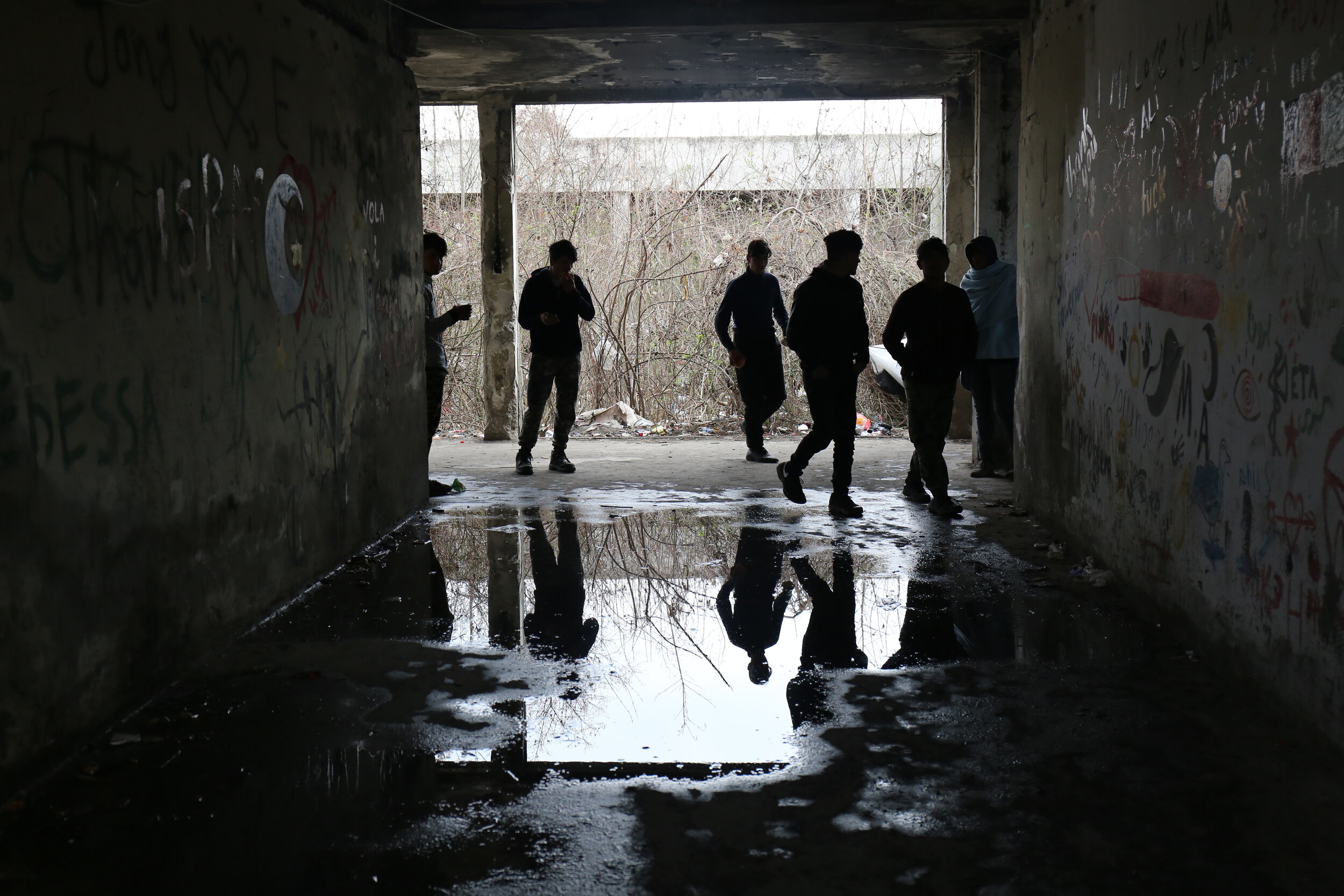
Photo by Almudena Ávila
Amad is not alone, during his long trip he met hundreds of people that were under the same circumstances. Every once in a while, I see pictures of him having dinner in a different house, with different people, most of them from North Africa. Sometimes I also see selfies of Amad in front of famous landmarks, and other times I spot photos of him in buses, trains, and stations. In the last ones, he was wearing a protective mask.
During my fieldwork, I have witnessed a certain solidarity amongst migrants and through the stories shared with me. Perhaps it is cultural understanding or social survival, but I believe there is something even more to this. I would describe it, rather than solidarity, as humanity.
The Portuguese government demonstrated solidarity some days ago when they decided to grant temporary citizenship to migrants. At least this was the headline. Specifically, the measure allows foreigners with pending applications to access public services until, at least, 1st July. Eduardo Cabrita, Minister of Internal Affairs said “It is important to guarantee the rights of the most vulnerable” He also added, “It is a duty of society in times of crisis to ensure that immigrant citizens have access to health and social security”.
Apart from the fact that asylum-seekers will still be more vulnerable to harsh socio-economic disadvantages and will need social rights after 1st July - even when there is no risk of them spreading the coronavirus - what happens with those with no pending application?
Amad has heard the latest news regarding the decisions made by the Portuguese authorities. In fact, he decided he is heading there. The “bad conditions”, as Amad described, in which he was living in Germany pushed him to leave the country. After spending days on the streets, with nowhere to go and with all the shops and markets closed, the German police caught him and tested him for coronavirus. The results were negative. After that, he was sent to a camp near the border of the Czech Republic. “I had to leave this place because there was a lot of tension there, the camp staff were treating us really badly and the living conditions were poor”, Amad explains.
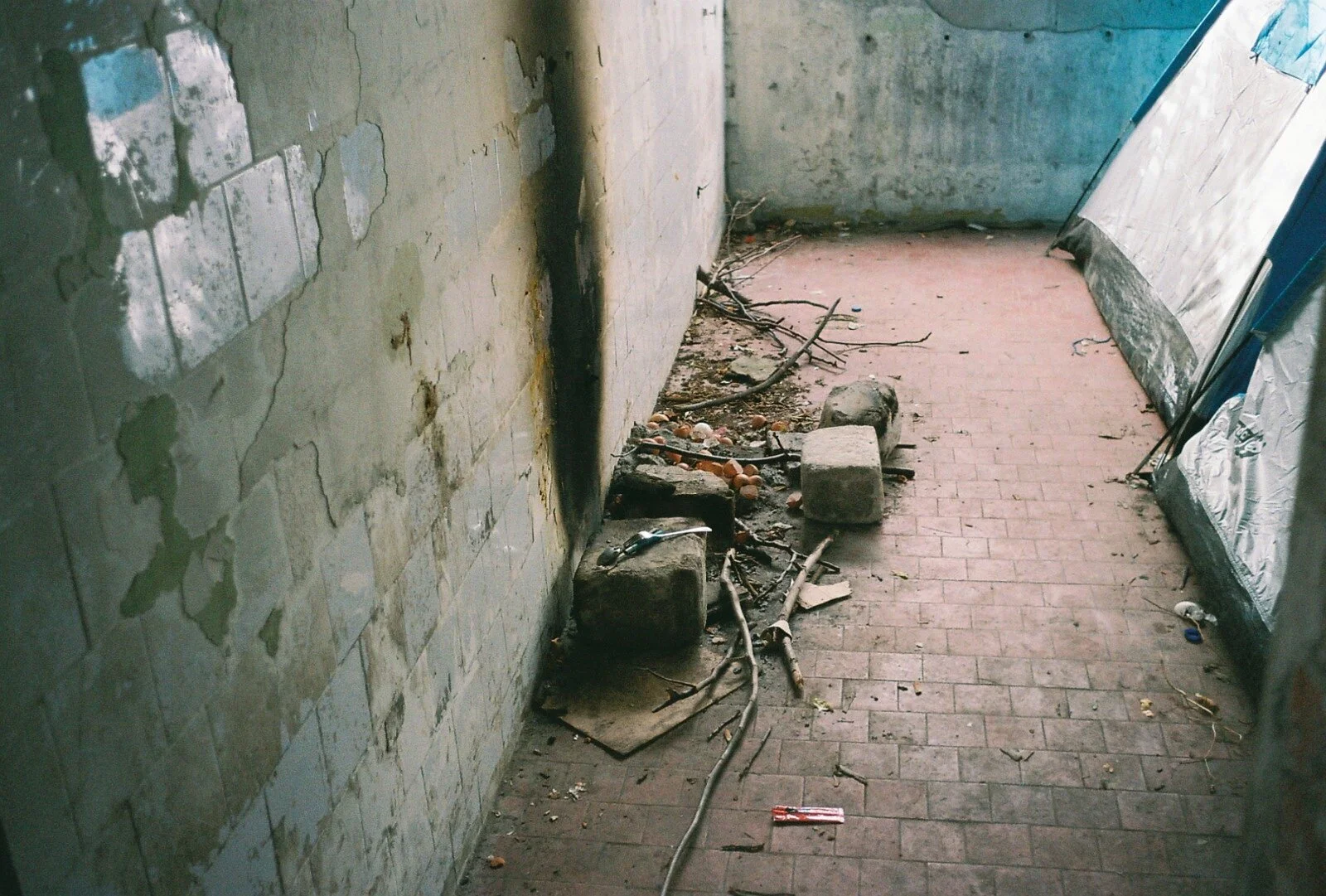
Photo by Enrico Pascatti
People like Amad are known as illegals. In practice, this means that if your paperwork is under an irregular situation, you are a sub-human in the cruel, condescending and racist socio-political order. Several countries have policies that allow arresting migrants and locking them down in detention centres before deporting them back to their countries, against their own will.
The coronavirus outbreak has provoked many countries around the world to close their borders with Spain as an action to contain the virus. Under these circumstances, deportations cannot occur. Therefore, it has been decided to release all those imprisoned in one of the detention centres in Madrid, while social movements continue to apply pressure to shut all of them. Nevertheless, these people will still be denied their basic social rights, as their release is not equivalent to their freedom.
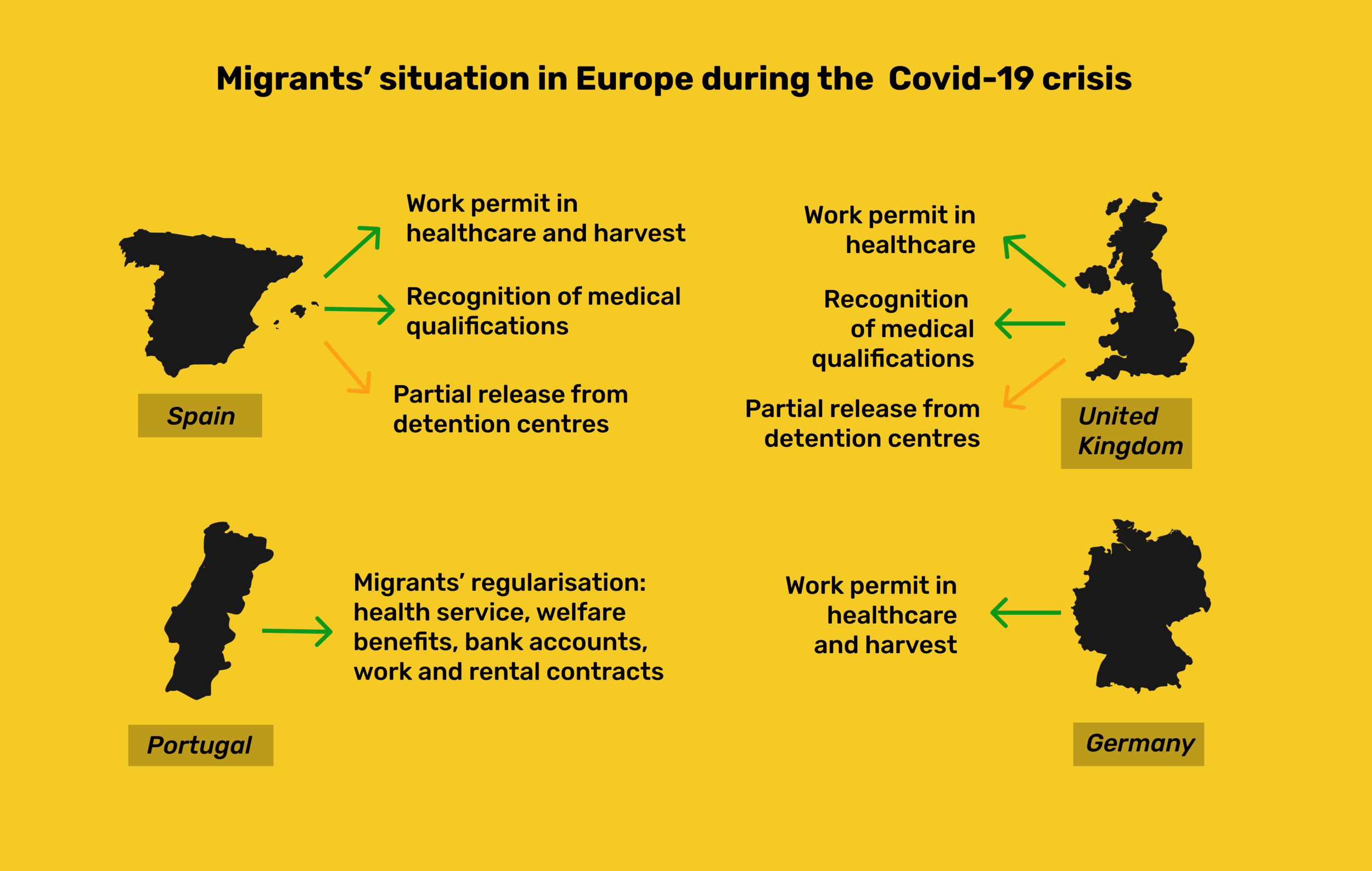
This infographic shows actions taken by Spain, the UK, Portugal and Germany towards migrants during the Covid-19 pademic as of April, 2020
Western civilizations are based in colonialist and anthropocentric ways of living; they continue to prioritise white men’s interests above everything, above humanity and nature. The result of this ideology has been the continuous extractive activities in our natural resources and the construction of a non-written division in the value of human beings. This worldwide pandemic has made us stop from our frantic daily routines and pushed governments to take exceptional measures regarding migrants’ rights. Whether these decisions have been taken with a selfish, temporary motive, it is time for civil society to realize that things can operate, if there is a will, in a different way.
Community-led and solidarity activities are being born from the civil society to join forces and palliate the disadvantages of those in need during these harsh times. Coronavirus can act as a metaphor of equality and what’s important in humanity. Diseases show us that differences between ethnicities and class are man-made structures for unjust living, and hurdles can sometimes become a motive to slow down, meditate and build something new.
This could be a starting point to urgently re-think how our society is structured and how we can make amends to those who have been left behind by reframing the power structures and distributing impact and resources more evenly.