
What happened in other news?
News related to the COVID-19 epidemic have taken centre stage of most media outlets. Here are some news that may have been overshadowed due to the constant flow of information since the coronavirus outbreak.
Hindu nationalist riots against Muslim minority in India
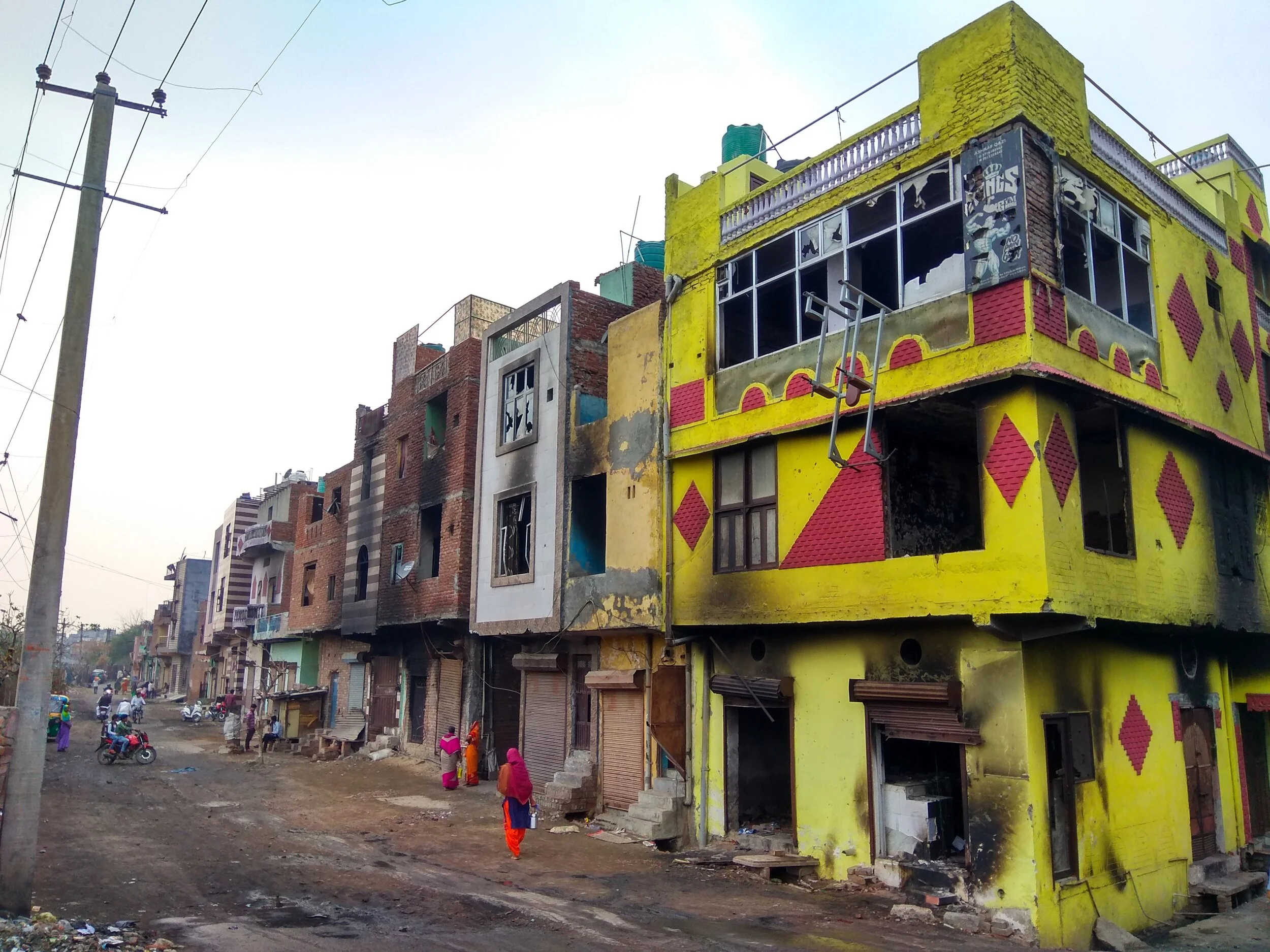
A row of buildings that were targeted by arson during riots. North East Delhi Riots 2020
Deadly attacks against the Muslim minority by Hindu nationalists started in early January in India. The assaults began as a response to the peaceful demonstrations that had taken place in the country to oppose the new Citizenship Amendment Law. According to this law, all undocumented migrants from surrounding countries can ask for Indian citizenship unless they are Muslims.
During the riots, Hindu mobs would stop people on the streets to ask for their ID and, if refused, they would be forced to show it. Mosques were set alight and Muslims were burnt alive in their homes or taken to the streets and lynched. Several international newspapers reported about the aggressions suffered by Muslims in India. Moreover, the police have been accused of by complacent and turning a blind eye to when the violence was clearly targeting Muslims.
These events took place in a context where the Hindu nationalist party is increasingly gaining power and influence. The Indian Prime Minister, Narendra Modi belongs to Bharatiya Janata Party (BJP), whose ideology is inspired by the main Hindu national organisation in the country Rashtriya Swayamsevak Sangh (RSS), which believes that India is as a Hindu nation and refuses a multi-faith, secular nation.
During the riots in Delhi, US President, Donald Trump, happened to be visiting the country. Trump refused to comment on the new Amended Law but stated that Modi “is working very hard on religious freedom”.
How has the situation evolved?
The coronavirus pandemic has worsened even more the conditions of Muslims living in India and accentuated the inequalities between Hindus and Muslims.
During the riots, many Muslim families have lost their houses and they depend now on charities and camps. Furthermore, false rumours about them as carriers of coronavirus have been spread among the community. Muslims in India had reported being called “corona jihadists” while their businesses have been boycotted, they have been accused of polluting water and posters banning them access have appeared in certain neighbourhoods.
Furthermore, the US Committee on International Religious Freedom has expressed its concern about a report which denounces segregation between Muslims and Hindus in a hospital during the Covid-19 crisis.
Read more about the riots in India
Recommended reading about the rise of Hindu supremacists in India:
Israeli annexation of the West Bank continues with Trump’s support
Benjamin Netanyahu, Israel Prime Minister, claims Trump will allow the annexation of a part of the West Bank within months.
Last February Trump published the so-called “Deal of the Century”, in which, among other measures, Jerusalem would be the official capital of Israel. The Israeli settlements in the occupied West Bank would become Israeli territories and the right of return for all the displaced Palestinians would be denied. The Palestinian counterpart has refused this decision and publicly opposed to this plan.
Before the arrival of Donald Trump to the US presidency, the Israeli settlements in the occupied West Bank were considered illegal, nevertheless the “Deal of the Century” plans to annex them to the official Israeli territory. The legalisation of the Israeli settlements would mean an even more divided West Bank, in which the Palestinian territories would be like islands separated by Israeli settlements. Josep Borrell, High Representative of the European Union, has said that this unilateral annexation would involve a “severe violation of international law”.
Palestinians have been living under the Israeli occupation since 1948.
Learn more about the Deal of the Century and its consequences:
LGBTQ+ repression in Morocco
Gay men in Morocco outed as their photos have been spread online. With everyone under lockdown in the country, there is nowhere to hide for those who have been publicly exposed in a country where homosexuality is illegal and socially punished.
Rights activists stated that around 50 to 100 persons have been outed during the past weeks. Activists have also denounced threats to the affected persons. Journalist Hicham Tahir has been reporting on his Twitter account the latest events that have happened in Morocco. He has published about a suicide committed in Rabat out of despair.
Un ami vient de m'annoncer le décès de son ami. Ses photos ont été partagées. Par désespoir, il s'est suicidé. Mon ami a dû apprendre la nouvelle de la bouche de la mère du défunt. Elle ne comprenait pas pourquoi son fils s'est suicidé. On en est là.
— Hicham Tahir (@HichamTahir) April 17, 2020
The punishment in Morocco for maintaining sexual relationships with someone of the same sex is, according to the 489 article of the criminal code, up to three years of jail. This pushes many to seek asylum in Europe and places where they will not be persecuted for their sexual orientation.
To go deeper in the latest events that happened in Morocco we suggest this article:
If you want to know more about the general situation of LGTBI people in Morocco we suggest:
Rohingya Refugees are still fleeing Myanmar
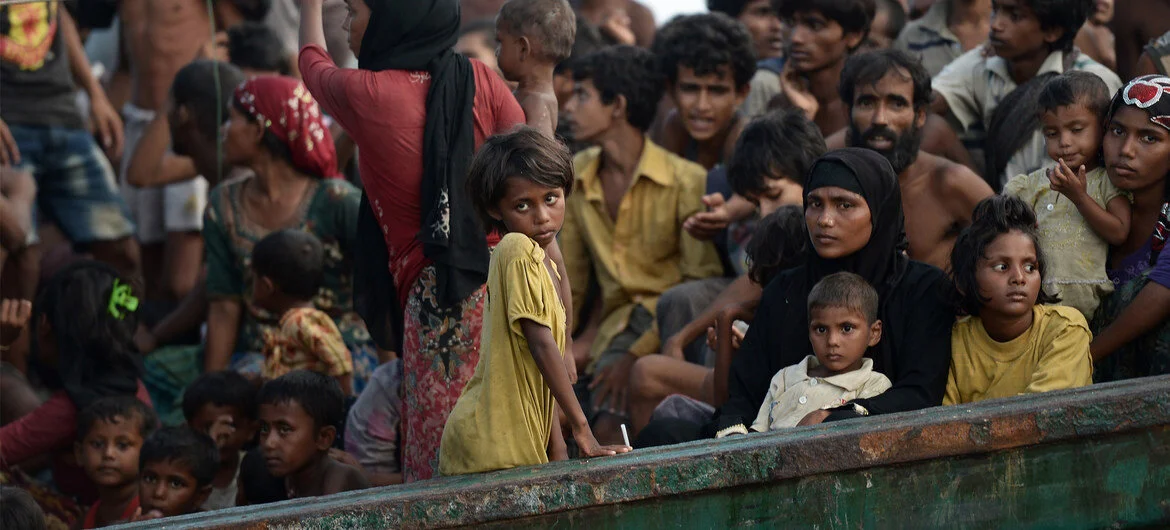
UNHCR/Christophe Archambault
Boats with Rohingya refugees are stranded in the high sea due to the refusal of both Malaysia and Bangladesh to welcome them. Malaysian authorities stated that they cannot accept refugees because they might be carriers of Coronavirus. On the other hand, the Bangladeshi Government added that they will not be allowed to enter as Bangladesh “is always asked to take care of the responsibilities of other governments”.
Human rights groups are concerned about the governments taking the coronavirus crisis as an excuse to push refugees back. According to an article written by The Guardian, it is not clear for how long these two boats have been stranded on the sea nor if there are some other dinghies adrift.
Rohingya are a Muslim ethnic minority in Myanmar and they are not recognised as lawful citizens by the government. In August 2017, a group of militant Rohingyas called the Arakan Rohingya Solidarity Faction killed 12 members of Myanmar security forces. The response resulted in a wave of violence that left many civilians killed and injured. By the time, the UN High Commissioner of Human Rights said that although Myanmar had refused the access to human rights investigators and so the situation cannot be fully assed, it seems a textbook example of ethnic cleansing.
The United Nations Human Rights Officer of the High Commissioner has highlighted in a report stories of refugees talking about gang rapes, killings, lynching and burning homes. In the meantime, Aung San Suu Kye, leader of the National League of Democracy and Nobel Peace Prize has not condemned the military violence against Rohingya in her country.
Find out more about the general situation of Rohingya refugees: