
This Virus Does Discriminate
An analysis of how the sanitary crisis has aggravated the living conditions of migrants and ethnic minorities in the UK
Written by Sofia Camaano Deus
It takes thirty-five minutes to cross the Eurotunnel that separates France and the UK by car. For Mudassir, it is taking more than ten months. He is trapped in Calais, one of the hotspots in the French-English border where migrants wait for their opportunity to cross to the United Kingdom.
The Covid-19 sanitary crisis is forcing some NGOs to withdraw from the field, which is worsening the poor conditions in which people were already living in Calais. “Since the Coronavirus crisis started, we get less food, and we don’t have that many opportunities to take showers”, Mudassir explains. By the time European countries were starting to close their borders because of the coronavirus outbreak, refugees in Calais claimed that they would keep attempting to enter the UK rather than going to accommodation centres. The French authorities have already started to transfer migrants from these makeshift settlements at the border to official dwellings. NGOs on the field believe that these centres have a capacity for around 400 people while more than 1,500 persons are living in informal camps in Northern France. Furthermore, Mudassir explains that some migrants refuse to be transferred because if they do, their chances to be able to come back to Calais afterwards would be heavily reduced. This would mean a step back in their ambition to arrive in the United Kingdom.
The situation for migrants, asylum-seekers and refugees in the UK is probably not as Mudassir and his fellows imagine it. If living conditions were already bad, they have worsened since the coronavirus emergency started. The Home Office policies state that asylum support -which consists of temporary shelter and £37.75 weekly support budget per person - will stop 28 days after the asylum condition is granted. Although it has been announced that people will not be asked to leave their accommodation during the sanitary crisis, the late response has already left many people in a homeless situation. In fact, charities claim that the Home Office failure to act quickly in this crisis has left hundreds of migrants destitute during the pandemic. Boris Johnson's promise to provide shelter to all rough sleepers has not been kept, according to several organizations' statements. NGOs such as Crisis, Public Interest Law Center and Migrants Rights Network claim that many continue to sleep on the street because councils have turned them away or because they do not know how to get the appropriate support. On the other hand, those who do have a place to stay, are not always living in acceptable conditions. Investigations show that some accommodations for migrants are overcrowded and unhygienic
Uneven living conditions based on ethnicity in the United Kingdom has been a problem that existed before the coronavirus crisis.
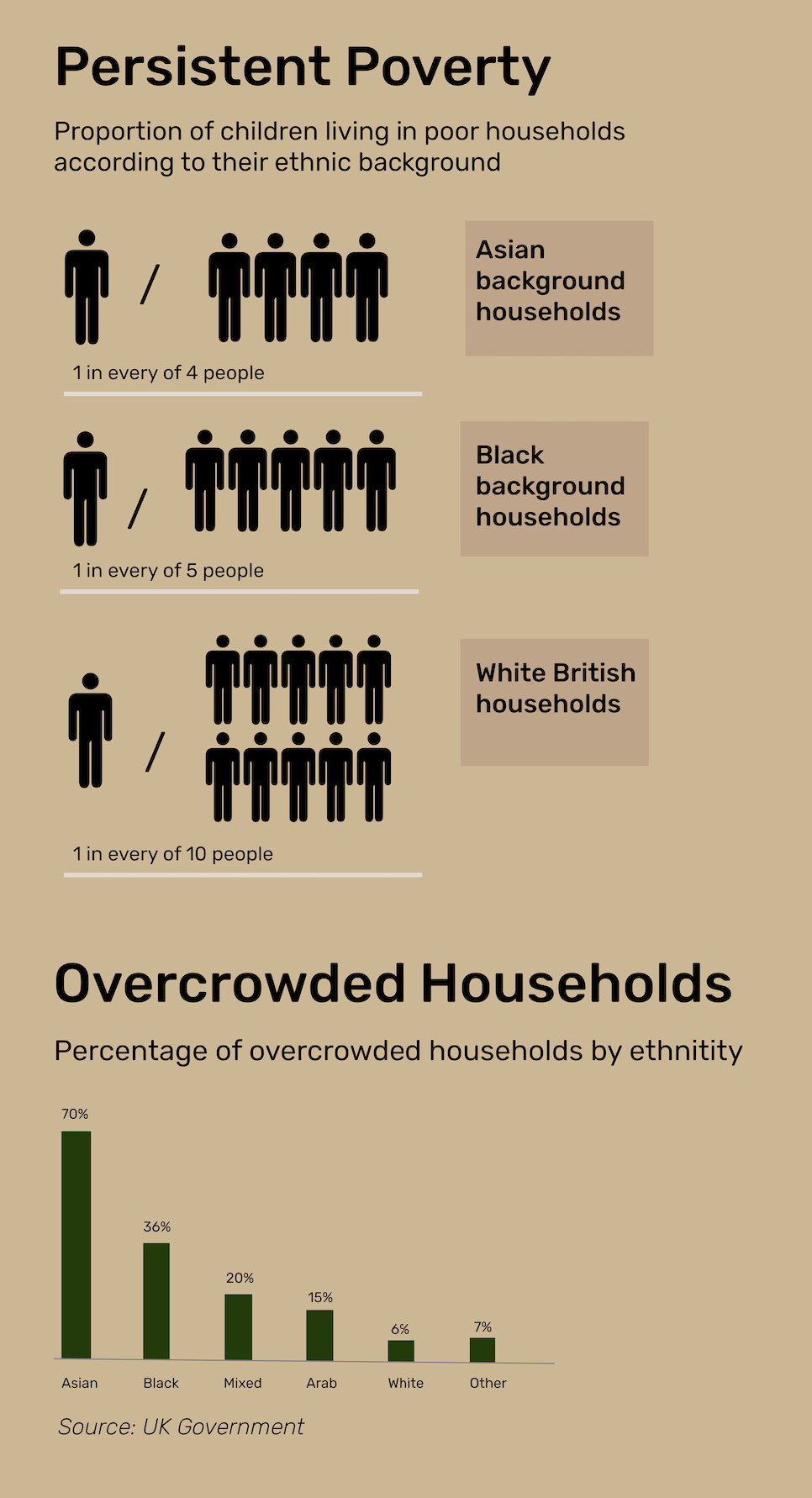
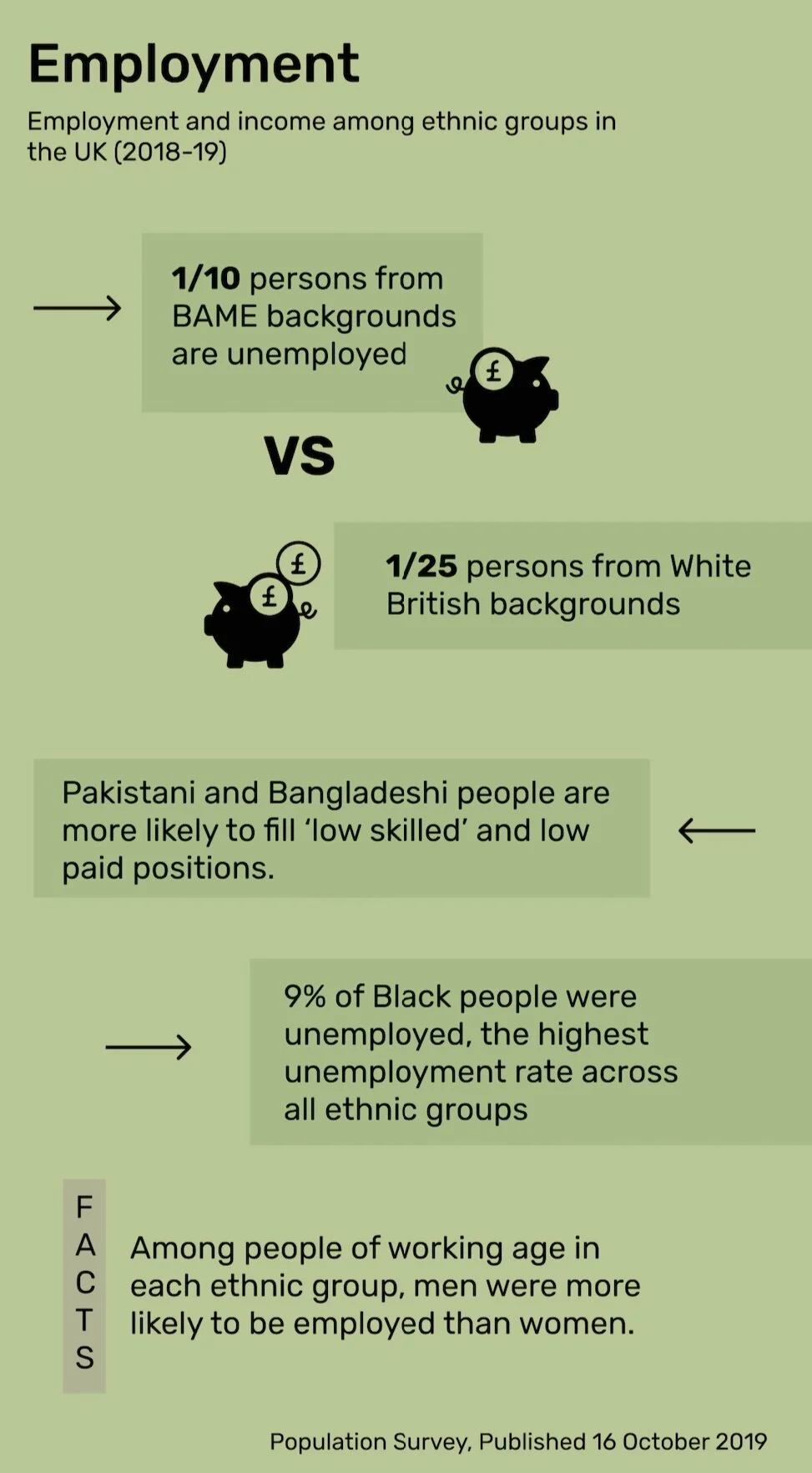
Back in 2012, Theresa May stated in an interview with the newspaper The Telegraph that she aimed to “give illegal migrants a really hostile reception”. The term hostile environment can be summarized nowadays in several measures that asphyxiate migrants’ daily lives in order to make it difficult to live in the UK.
The sanitary crisis has accentuated and worsened the conditions in which people from ethnic minorities are living. Although coronavirus tests and treatment are free for everyone regardless of their legal status, many years of hostile policies have caused unease in many migrants’ experience with the public system. The NHS has been sharing migrants’ data with the Home Office and provoking fear and lack of trust in the health services.
Recently, sixty cross-party MPs have warned the health Secretary, Matt Hancock, about this and called for the suspension of charging migrants, associated data-sharing and immigration checks. Campaigners have also reported the death of a man from the Philippines suspected to be a coronavirus case after not accessing the healthcare services for fear of being reported to the Home Office.
On the other hand, non-EEA nationals with temporary permission to remain in the UK are subjected to “No Recourse for Public Funds”, which prevents them from accessing most state-funded benefits, tax credits and housing assistance. These measures decrease the options that migrants have for survival during the Covid-19 pandemic.
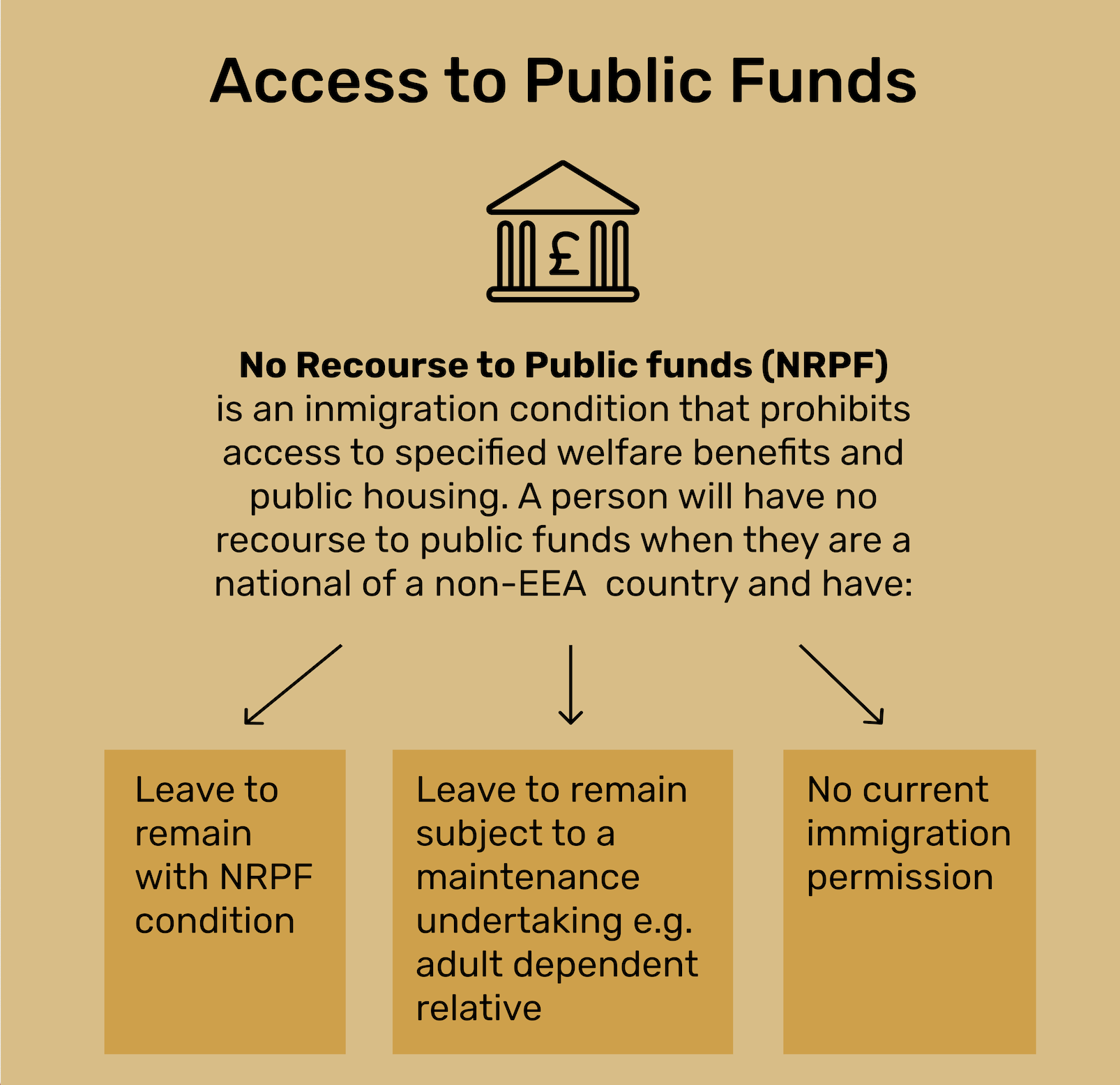
Source: Freemovement.org
Some Parliamentarians and external stakeholders want the government to annul the NRPF as a response to the crisis. In fact, a High Court hearing on the continued legality of the no recourse to public funds condition was scheduled for 6 May.
The coronavirus crisis is preventing seasonal workers from being able to come to the UK to work in the fields, which might result in a scarcity of fruits and vegetables, as a result of most ‘low-skilled’ jobs being fulfilled by migrants. The National Farmers Union (NFU) estimates that there are around 70,000 seasonal worker roles that need to be fulfilled. In order to meet the demand, flights from Romania have been organised to bring the required workforce to the UK. Additionally, a campaign to encourage British workers in furlough leave to “pick for Britain” was launched. A large number of people applied for the job in the first instance, although only 5,500 applicants chose to continue to the second phase and go through an interview, according to the charity Concordia. This occurrence of requesting immigrant labour when in crisis, with the promise of equal opportunity and a new life, is not at all novel. So is the hostile treatment of migrants as a burden to society.
People who were considered to be before the crisis as low-skilled workers, a word that has been used with a negative connotation, are now named as key workers. Although this change might be seen as an improvement, it reveals the racist structure under which our society has been built on, which associates work carried out mostly by migrants as unskilled and thus unworthy of protection and appreciation. Neo-colonialism decides whether or not to value migrants’ labour depending on what the national economy needs in a precise moment. This logistic creates a thought in the social imaginary through which migrants are not considered human beings but trade tools.
The coronavirus crisis has not randomly affected more migrants, refugees or people from ethnic minorities. This happened because we were already living in a society that has historically considered immigrants from different backgrounds as others, despising them in accordance to the concerns of the socio-political-economic system. Geographic movement is a feature inherent to human beings, it is a way of human survival. Migrants should not be seen as something external, different or strange but as part of a dynamic society, that complements it in all the possible ways.